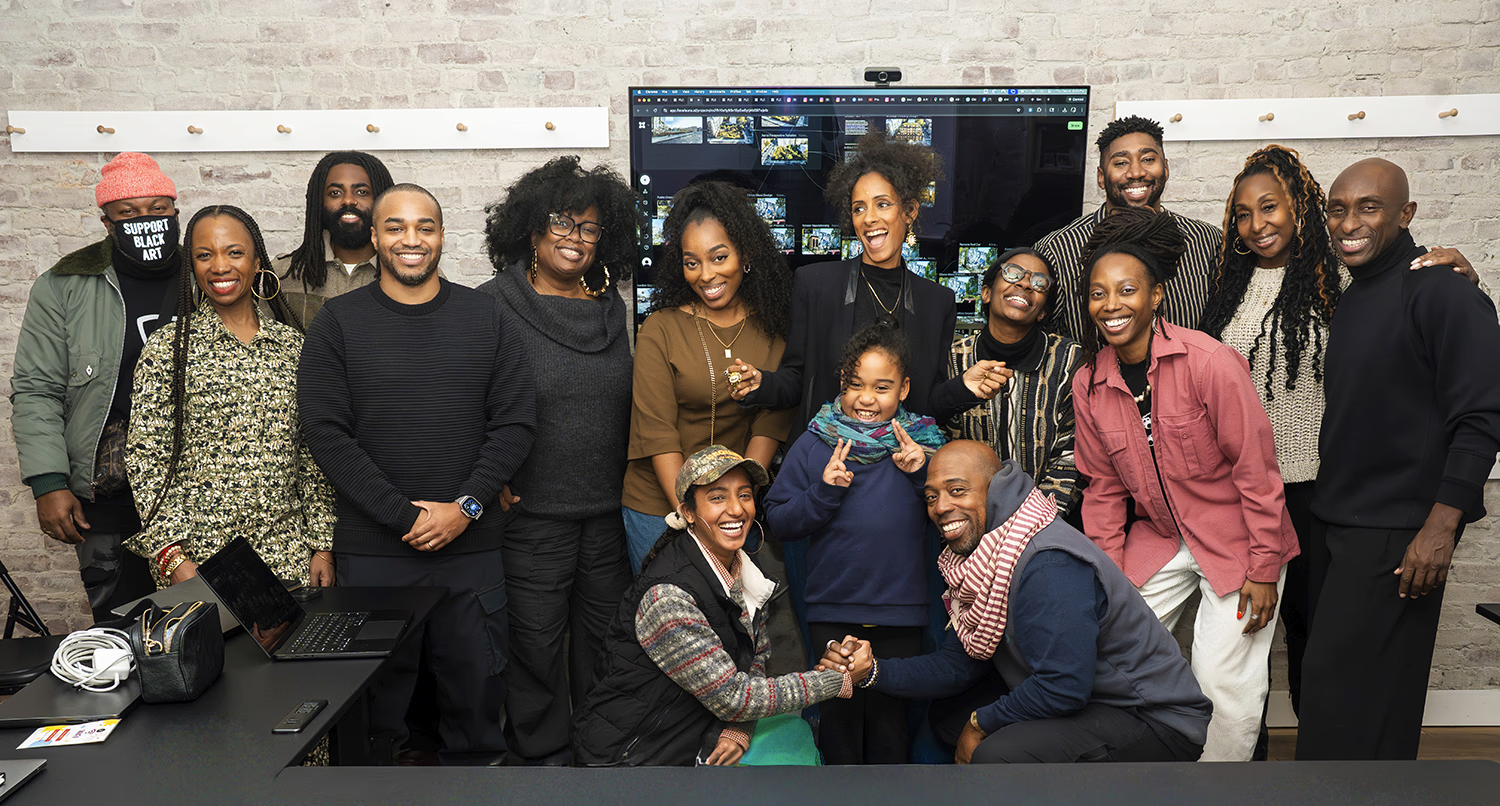
But this wasn’t a traditional hackathon. There were no startup pitches, coding competitions, or pressure to build the next big thing.
Instead, artists, technologists, organizers, and residents gathered to ask a different question:
What happens when communities are given the tools to visualize the futures they want to live in?
For one evening, Bed-Stuy residents worked alongside AI-literate artists to transform lived experiences, memories, frustrations, and hopes into visual futures using tools like Sora and FLORA. Together, they explored AI not as a replacement for creativity or culture, but as a tool for storytelling, preservation, advocacy, and imagination.
Why The Laundromat Project?
The Laundromat Project has long been a cultural anchor in Bed-Stuy, advancing artists and neighbors as change agents within their own communities. Their work supports cultural leadership, preserves local stories, and creates opportunities for residents to shape the future of their neighborhoods.
The questions surrounding AI are not abstract. They are already impacting communities through access, education gaps, representation, labor shifts, and cultural visibility. This collaboration asked: How can communities use these tools on their own terms?
Reimagining the Hackathon
Prompt & Purpose reimagined the traditional developer sprint through a cultural lens. Instead of building apps, participants built visual stories. Instead of pitching venture-backed products, residents explored neighborhood identity, cultural preservation, visibility, and collective futures.
Five artists and creative technologists guided residents through AI image and video tools. Participants needed no prior technical experience.
- Community members brought lived experience and vision.
- Artists translated those ideas visually.
- AI tools accelerated visualization and experimentation.
- Learning happened through co-creation rather than instruction alone.
Empty Lot Transformations
Vacant spaces became gardens, libraries, performance spaces, marketplaces, and cultural hubs.
Small Business Visibility
Local businesses explored AI-assisted visuals and campaign concepts without agency-scale budgets.
Speculative Futures
Residents visualized greener streets, stronger community ties, safety, joy, and cultural continuity.
The Empty Lot as a Question
Vacant lots often become symbols of stalled progress, speculation, or decisions made far from the communities most impacted by them. For participants, these spaces represented memory, possibility, frustration, and loss.
Using street photographs and map screenshots, residents transformed underused spaces into speculative visual proposals. They imagined intergenerational gardens, libraries, performance spaces, playgrounds, and greener blocks where people felt safe gathering again.
“Being able to use it with trusted voices was really big for me. I wanted to make a community space, a library and a performance area, and seeing it come to life made it real.”Will Adams / Participant
AI as a Tool for Cultural Agency
Many participants arrived skeptical. Through collaboration with artists who approached the tools critically and intentionally, they began seeing AI less as a threat and more as a medium.
“Once I saw how AI could help us write our own stories, I wanted to make sure our people were in the room using it.”Joy Fennell / Artist
“What kind of story do you want to share that you would never see in Netflix and Marvel?”Delphine Diallo / Artist and photographer
What We Learned
Community-first framing matters
People responded most strongly when the technology was grounded in local realities and cultural relevance.
Artists are translators
They did more than teach software; they helped residents turn abstract feelings into visible forms.
Visualization creates agency
Seeing an idea made it feel tangible, discussable, and actionable.
Literacy must include criticality
Ethics, ownership, labor, and cultural responsibility mattered as much as technical fluency.
Building What Comes Next
This pilot is the foundation for a replicable framework for community-centered AI education and cultural storytelling—one that can scale across neighborhoods, institutions, and cities.
The goal is not simply increased access to technology. It is creating spaces where communities can shape narratives, visualize futures, learn through collaboration, and build cultural agency.
Credits
A Prompt & Purpose Hackathon in partnership with The Laundromat Project. With support from OpenAI and FLORA.
Featuring Joy Fennell, Delphine Diallo, Deia Cione, Leighton McDonald, and Alexia Adana.